
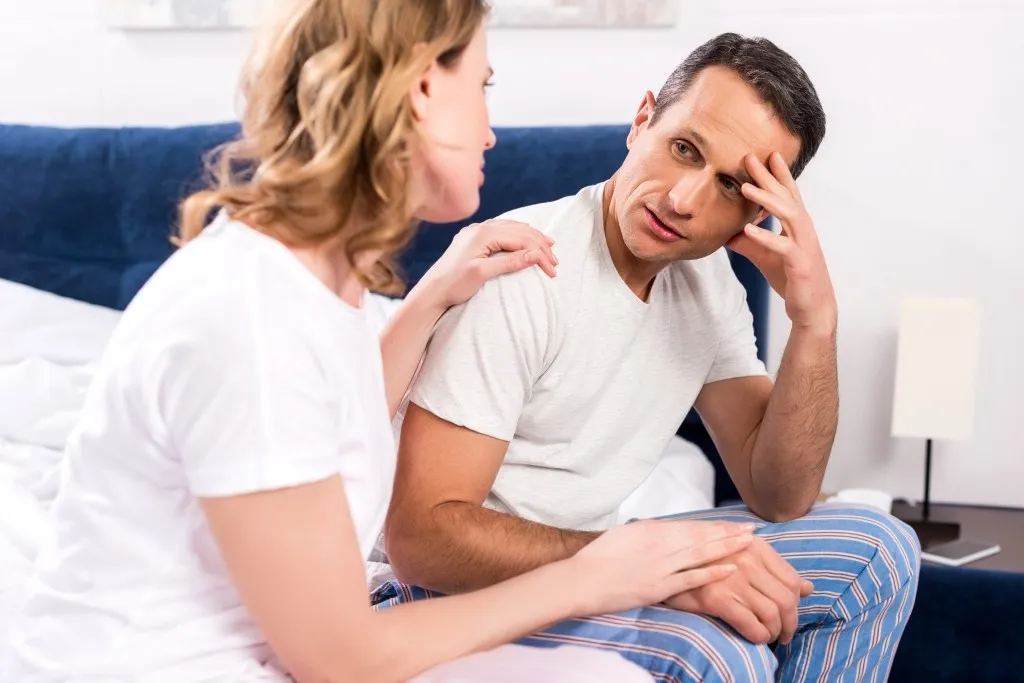
Why Do I Pretend in the Bedroom?
How Sexual Avoidance, Shame and Other Impacts of Childhood Sexual Abuse Can Affect Your Relationship Intimacy
Why do I pretend in the bedroom? Why do I love my partner, feel attracted to them, and still feel afraid or anxious about making love with them?
These are questions far more common than most couples realize. On the outside, everything looks perfect: the courtship was exciting, the wedding was beautiful, the photos were glowing, and everyone assumed the honeymoon was filled with passion and promise. You built a life together — good jobs, great kids, a home full of activity and love. You can afford babysitters, vacations, and the occasional date night. From the outside, it looks like the dream.
And yet, inside the bedroom, something feels wrong.

You find yourself pulling away. You fake pleasure. You pretend you’re having an orgasm even as your body is tense, your eyes are squeezed shut, and your mind is far away. Maybe you don’t want to touch your partner.
Or you don’t want to be touched. You may feel ashamed of being naked. You feel embarrassed and overwhelmed and sometimes guilty because you can’t meet the needs and excitement level of your partner.
Meanwhile, your partner is confused and hurting. They want to kiss you, touch you, feel close to you, and have that closeness returned. They want to feel desired. They want to feel connected. Instead they often feel rejected. They sense distance. They sense withdrawal. They sense something they can’t name. And any attempts to talk about the problem get met with denial such as, “Gee, I think our time together is fine.” Or “You always find fault with me.” Or “You always want more.Can’t you be ok with what we’ve got?”
So the partner on the receiving end of the rejection goes out for a drink with a close friend and hesitates to say the words out loud: “I don’t feel desired. I don’t know what’s wrong. I love my partner, but something feels off. I’m scared this marriage isn’t what I thought it would be.”
What is going on?
Why can’t we just be open, loving, giving, and receiving with each other? Why do our bodies shut down with the person we love most?
And why — with one‑night stands years ago — could we “get off,” pretending everything is fine, and then leave without a second thought?
The Hidden Answer: The Body Remembers What the Mind Tries to Forget

Estimates of childhood sexual abuse vary depending on how abuse is defined and measured. The Centers for Disease Control estimates that up to 1 in 4 girls and 1 in 7 boys experience sexual abuse before age 18. (https://www.cdc.gov/child-abuse-neglect/about/about-child-sexual-abuse.html)
Many know this about themselves. Many do not. Some remember everything. Others remember nothing until adulthood.
When they called for help, some were believed and supported. Others were silenced, shamed, or ignored.
When abuse is discovered early and a child receives therapy, support, and protection, healing is more accessible. But far too often, the abuse goes undiscovered — or worse, it happens within the family, where secrecy and denial are the norm. The child grows up, becomes an adult, and builds a life without realizing they are dragging enormous, invisible burdens with them.
Sometimes a child grows up in a home that shoves sex under the bed.Perhaps mom or dad were abused themselves or told their bodies were unacceptable andthat touching oneself is dirty.
Or a woman dates a man who is sexually abusive or extremely critical of her body and then makes the woman feel ashamed and unworthy.
We can’t name all of the reasons why sex becomes distasteful but suffice it to say that our sexuality is a gift to us and yet, if we are mistreated or abused or shamed or laughed at or rejected unfairly, then it is easy for us to develop some of the emotions and experiences listed below.
Talking with your trusted partner or a professional or a close and trusted friend can help us begin to open to our fragility.Look at the list below and see if you find yourself on it.If so, there may be hidden memories or experiences that need to be brought into the light.
Shame
Fear
Hypervigilance
Body numbness
Dissociation
Depression
Dread
Confusion about desire
Confusion about boundaries
These burdens don’t disappear with age. They don’t disappear with love. They don’t disappear with marriage. They show up in the bedroom.
Why the Bedroom Feels Unsafe — Even With Someone You Love
Sexual trauma affects the nervous system. It teaches the body that sexual touch is dangerous, overwhelming, or confusing. Even if the mind says, “I love my partner,” but the body says, “I’m not safe.”
This is why survivors often report:
Feeling shut down during sex
Feeling anxious or frozen
Closing their eyes tightly
Going through the motions
Feeling disconnected from their body
Wanting sex to be over quickly
Avoiding intimacy altogether
And there is an especially confusing part of this experience.
Sex with someone you don't love can sometimes feel easier because there is less emotional vulnerability. There may be less fear of being truly seen, less fear of disappointing someone you deeply care about, and less emotional risk.
With a partner you love, the stakes are higher. The vulnerability is deeper. The body remembers danger, even when danger is long gone.
When Memories Return or the Truth Comes Out

For many survivors, the memories return in adulthood — sometimes triggered by marriage, pregnancy, parenting, or simply the safety of a stable relationship. When the truth surfaces, it can feel like the ground is shaking beneath both partners.
This is the moment when couples face a choice: turn away from the pain, or turn toward each other. Experts in trauma and couples therapy agree on one thing: Healing becomes possible when the couple faces the truth together.
The partner who was not abused plays a crucial role. Their response matters deeply. Some partners feel shocked, confused, or overwhelmed. Others feel grief for what their partner loved or endured. But the partners who can show:
Patience
Maturity
Compassion
Steadiness
Curiosity
Gentleness
…become a powerful source of healing.
Picture the partner who wasn’t abused holding their spouse with tenderness, saying, “I’m here. I’m not going anywhere. We’ll walk through this together.” That moment alone can begin to rebuild trust and safety.
Signs You May Be Carrying Unresolved Sexual Trauma
Not everyone remembers their abuse. Not everyone recognizes the signs. Here are some experiences that may suggest unresolved trauma:
1.When my partner wants to have sex, my first instinct is to withdraw.
2.I need extreme privacy and don’t want my partner to see my nude body.
3.Or, I may not want to see their nude body.
4.I don’t like to touch or be touched.
5.I can climax with a vibrator or porn, but not with my partner.
6.I have scary dreams.
7.I sometimes have intrusive or confusing sexual thoughts.
8.I have flashbacks or body memories.
9.I sometimes wonder if I have PTSD.
10.As a parent, I feel anxious or reactive when my child explores their body (which is normal for young children).
These signs don’t prove anything—but they are invitations to explore your story with a trauma‑informed therapist.
What Healing Looks Like—For Both Partners
Healing is not quick, but it is absolutely possible. And many couples report becoming closer, more intimate, and more emotionally connected as they work through the problems.
Here’s what the healing journey often includes:
1. Individual Therapy for the Survivor
Trauma‑informed approaches such as EMDR, somatic therapy, or trauma‑focused CBT help survivors:
Understand triggers
Calm the nervous system
Reduce shame
Reconnect with their body
Separate past danger from present safety
2. Couples Therapy
A therapist helps both partners:
Communicate without blame
Understand trauma responses
Rebuild trust
Create safety in the bedroom
Move slowly and intentionally
3. Rebuilding Nonsexual Intimacy First
Before sexual intimacy returns, couples often rebuild:
Emotional closeness
Affection
Touch without pressure
Safety
Connection
4. Gradual, Gentle Sexual Reconnection
Sex returns slowly, at the survivor’s pace, with:
Consent
Communication
Grounding
Patience
No performance pressure
This is where many couples discover a deeper, more conscious, more loving sexual connection than they ever had before.
A Message of Hope
If you see yourself in this story—whether you are the survivor or the partner—know this:
You are not broken. You are not alone. Your relationship is not doomed.
Your sexuality is not gone forever. Your body is not betraying you—it is protecting you.
And with the right support, you can heal. You can reconnect. You can rediscover pleasure.
You can build a marriage that is tender, safe, intimate, and deeply loving.
The past may shape you, but it does not have to define your future. Healing is possible. Love is possible. Intimacy is possible.
And you deserve all of it!
A Next Step for Couples
If this article helped you recognize that something may be getting in the way of intimacy in your relationship, you may want to take the next step by exploring What's Blocking Intimacy in Your Relationship?
This 2-minute assessment is a simple way to begin identifying some of the patterns that may be affecting closeness and intimacy — without blame, pressure, or having to figure everything out at once. Download the free resource here >>